
Small Apartment Living Room Ideas That Add Storage Without Crowding the Room
Keep the route through the living room clear, then assign storage to the activities that actually happen beside the sofa.
This page contains affiliate links. As an Amazon Associate I earn from qualifying purchases.
A coffee table can fit between a sofa and television while still leaving the surrounding area awkward to use. The test is what happens when someone walks past, opens a compartment or sits down with a drink. Start by marking those movements, then decide which belongings need a home beside the seating area. This guide covers living-room placement; it does not turn every apartment storage problem into a furniture purchase.
Start with the path through the room
Walk through the living room carrying a laundry basket. Notice where you turn sideways or move a stool out of the way. That path is useful space. A deep storage cabinet may hold more than a narrow shelf, but it can make the entire room feel smaller if it narrows the only route to the sofa. Mark the floor with painter's tape before purchasing furniture. Leave room for doors and drawers to open as well as for people to pass. If storage at the entry is the real bottleneck, start with our shoe storage comparison before choosing living-room furniture.
In a rental, a storage plan should also survive a move. Freestanding pieces are easier to relocate than custom cabinetry. That does not mean every piece needs wheels. A tall shelf can require anchoring, especially where children may climb, and a lift-top table needs clear space above and in front of it. review the product's dimensions and installation instructions rather than relying on your layout photograph in a listing.
Plan around the activity, not the storage furniture
In this hypothetical living room, the sofa is opposite a television and the route from the entrance to the kitchen passes one end of the seating area. Keep that route clear before deciding what belongs in the middle. A coffee table is useful if drinks, meals or work genuinely happen there. If it mainly holds unused objects, a smaller existing side surface may leave more usable space.
| Option | Problem it can solve | Space to check | What it cannot fix |
|---|---|---|---|
| Lift-top coffee table | Work materials or blankets near the sofa | Closed footprint, raised top and access to the compartment | A walkway already occupied by the table |
| Storage ottoman | Soft occasional items near a seating spot | Footrest position and space to remove or open the lid | Everyday contents buried under things placed on top |
| Small cube bookshelf | Books and small categories with no landing place | Floor area, shelf opening and required stability measures | Large seasonal possessions with nowhere else to go |
A room used for both work and relaxing
Assign work supplies one removable container and put it in a reachable existing compartment. Test whether you can retrieve it without shifting the sofa or clearing every item from the table. A lift-top design becomes a candidate only if its operating height and movement suit the task. Do not assume that a raised top is an ergonomic desk or that it supports a person leaning on it; those are separate requirements.
A room with toys or shared hobbies
Give the active project one container that can return to a shelf, and store rarely used equipment elsewhere. A decorative ottoman might hide everything but make sorting harder if its interior is one deep compartment. An open cube may be easier for a removable activity bin, provided the bin fits and is safe to retrieve. Keep small objects and heavy items in storage suitable for the household rather than treating an attractive photograph as a safety guide.
The VASAGLE table, AmasSmile ottoman and Furinno cube shelf below represent different jobs, not interchangeable winners. work with the ottoman decision guide for lid and seating questions, and the apartment storage map when the excess belongs in another room. Keeping that distinction prevents the living room becoming overflow storage for the whole apartment.
Put a week’s normal possessions back into the proposed layout before making a purchase. A work container needs to be accessible when a drink is already on the table, and a blanket compartment needs to open while someone is sitting on the sofa. Test those ordinary situations with your existing furniture. The useful plan is not the one with the largest hidden volume; it is the one that returns the visible surfaces to the activities you want to use them for. If living-room baskets mostly contain clothes, fix the closet bottleneck instead of adding another furniture piece.
Leave a little spare room inside each compartment. A storage piece packed tightly may look efficient in a photograph but makes daily use frustrating. The point is to make the apartment easier to live in, not to fit the greatest possible number of objects behind a door.
A measured plan for three common layouts
One-wall living room: If the sofa, television and entryway share a single wall, the center of the room is usually the busiest route. Test a narrow bookcase against the wall before considering a larger coffee table. Put the objects that have to be reached from the sofa at seated height. Leave the top shelf for belongings you seldom need. A low, broad unit can block an outlet or a radiator, so include those fixtures in your sketch.
Living room with a dining corner: Decide whether dining happens at a separate table or at the sofa. If the sofa doubles as a dining area, the useful feature of a lift-top table is the raised work surface, not simply the hidden storage. If meals happen elsewhere, a small ottoman and a clear floor may be more valuable. Measure the usable zone when chairs are pulled out, since the dining corner may occupy the same walkway as the living room.
Open-plan studio: Use one storage piece to define a zone only if it remains accessible on the side you intend to use. A bookcase placed as a divider can become awkward if the shelves face a narrow passage. A low piece preserves sightlines and often feels less imposing. Keep heavier objects low and follow the manufacturer's safety guidance for freestanding furniture.
Choose a home for the objects you actually use
Make three piles: items used daily, items used weekly, and items that simply ended up in the living room. daily items need an accessible home. Weekly items can go into a covered compartment or basket. Things that belong in another room should leave the living room before you buy furniture for them. For a broader room-by-room order of operations, see the small apartment storage plan.
For example, a lift-top table may be a practical home for a laptop charger and a notebook. It is a poor home for every spare cable in the apartment. Keep one small container for cables you use there, label anything less obvious, and move the rest to a utility area. For blankets, first count how many you regularly use. One accessible ottoman can be more useful than a stack of decorative baskets that has to be moved every night.
Use furniture that earns its footprint
A lift-top coffee table makes sense when you often eat or work at the sofa. The tabletop can provide a usable surface while the compartment below holds belongings you need nearby but do not want on display. The tradeoff is clearance: you must be able to raise the top without hitting a lamp, the sofa or your knees. Measure the available area in both its closed and open positions.
A storage ottoman suits a different routine. It can keep a throw, a game or a few toys in one place and give a guest somewhere to put their feet. A small foldable ottoman will not replace a large trunk. inspect the interior measurements, lid style and stated weight limits before assuming it can act as extra seating. If you open the compartment every day, choose a lid you can lift without moving everything on top.
Open shelving can help when the floor is limited but wall length is available. A narrow bookcase works best for objects you can group into a few clear zones: books together, everyday items within easy reach, and occasional items higher up. Leaving some empty space makes it easier to see and retrieve what is there. If every shelf is filled to its edge, your layout can look busy even when it is technically organized.
Compare the options by the job they do
The VASAGLE lift-top table listed below is a candidate for a sofa work or dining surface with enclosed storage. Check its current listing for the exact top height, lift mechanism and assembly details. The AmasSmile storage ottoman is a candidate when you need a compact footrest with an internal compartment; its folding construction calls for particular attention to dimensions and permitted loads. The Furinno three-cube shelf is an open-storage option for books and grouped objects. It solves a different problem from the two enclosed pieces, so do not treat them as interchangeable choices in a single ranking.
Product photographs often show a carefully staged room with little everyday clutter. Build your decision around the object you intend to store. A stack of books needs a shelf that supports its weight. A throw needs space it can be placed into quickly. Papers and chargers need a compartment that is easy to open while seated. The product with the largest advertised capacity may still be the wrong choice if its opening is inconvenient.
When to skip the storage purchase
Do not buy a larger coffee table just because it has a hidden compartment if the current table already fills the walkway. Reassigning one existing drawer or shelf can solve the problem without adding furniture. Skip an ottoman if the actual room needs a clear path for a stroller, wheelchair or frequently used folding chair. Avoid tall open shelving when it cannot be safely installed or anchored according to the manufacturer's directions.
If the sofa area is already crowded, focus on a single vertical or door-adjacent zone. Measure it, list what needs to fit, and choose one piece to solve that specific problem. Storage works when retrieving an item is easier than leaving it on the table.
Make the arrangement easy to maintain
After setting up the surrounding area, try it for a week before adding more organizers. Notice what keeps returning to the coffee table. If keys or mail land there every day, their assigned home is probably too far from the entrance. If a blanket stays on the sofa rather than going into the ottoman, opening and closing the lid may be too much effort for that routine. Move the storage location before buying another container.
Finish the arrangement for Small Apartment Living Room Ideas That Add Storage Without Crowding the Room
Choose the smallest change that lets the living room perform its real activities. keep the route open, assign nearby belongings a usable home and add a storage piece only when its access still works with the room occupied.
Test the walking route before selecting furniture
Sketch the route from the entry to the window, not just the furniture footprints. A lift-top table needs clearance in its raised position, while an ottoman needs space for the lid and for your knees. Try a taped outline for a full day before committing to a large piece.
A bookshelf that is narrow on paper may still obstruct a curtain, outlet, or door. review the actual assembly footprint and the way you will reach the lowest shelf.
A quick decision checklist
- Measure the exact location, including the space needed to open doors, lids or drawers.
- Confirm the selected product variant and dimensions on the current manufacturer's listing.
- Consider cleaning, accessibility and whether the item can be returned or moved if the layout changes.
- Choose the simplest option that removes a recurring inconvenience rather than adding storage for its own sake.
Related guides for the next decision
With small apartment living room ideas that add storage without crowding the room, different rooms often compete for the same limited storage. These guides address adjacent choices without assuming that every home requires another product.
- Small Apartment Storage Ideas, Room by Room — Start with the place where belongings enter or get used, and assign each category a reachable home there.
- How to Choose a Storage Ottoman for a Small Apartment — Choose a storage ottoman only when its footprint, opening motion and permitted uses match the job you need.
- Shoe Storage for Small Spaces: Cabinet, Bench or Door Organizer? — Choose a shoe cabinet for suitable pairs you want contained, a bench when approved seating is genuinely needed
- Shoe Storage for a Closet: Shelves, Boxes and Door Pockets — Keep daily shoes visible and reachable, and reserve labeled boxes for suitable occasional footwear.
- How to Organize a Small Closet Before Buying More Organizers — Sort the closet before purchasing an organizer: return active hanging clothes, assign folded categories to usable
- Small Bathroom Storage Ideas for Counters, Walls and Under the Sink — Clear a small bathroom by giving the counter, sink cabinet, shower and wall separate jobs while preserving acc
Product candidates for Small Apartment Living Room Ideas That Add Storage Without Crowding the Room
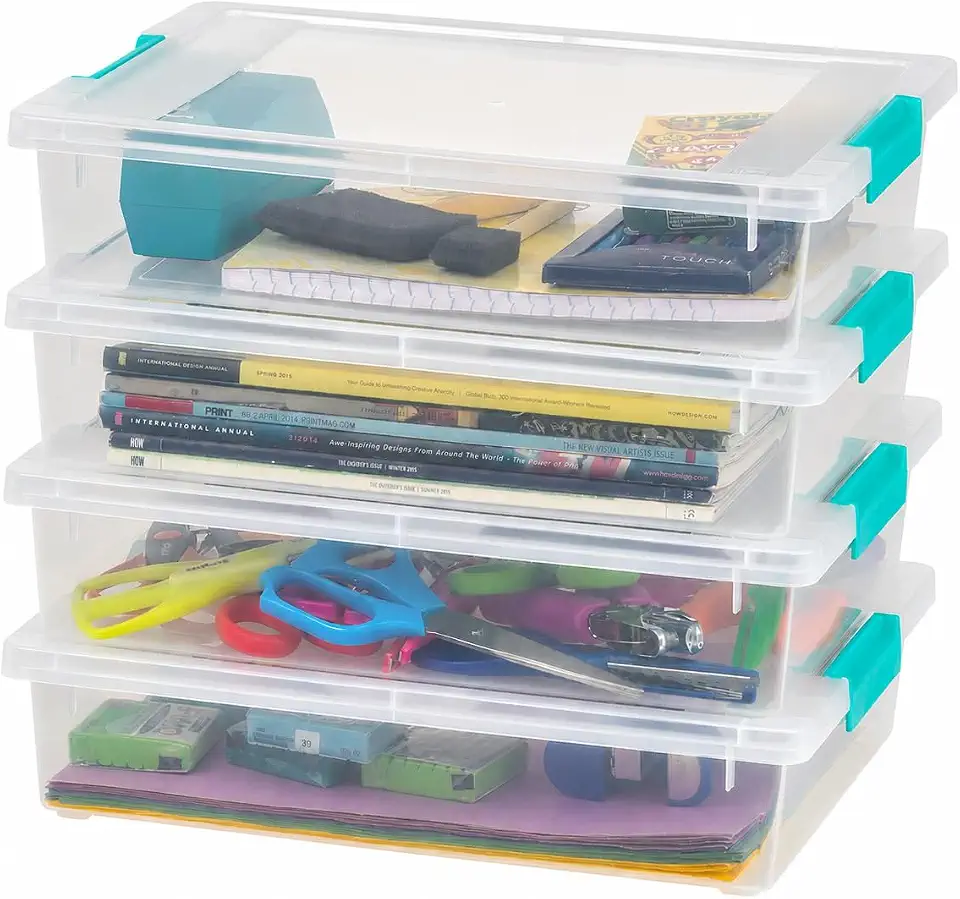
IRIS USA Storage Bins with Lids |Made in USA| 6 Qt - (4-Pack) - Clear
Chosen for Small Apartment Living Room Ideas That Add Storage Without Crowding the Room: it keeps one category visible in a single grab. Check the floor footprint and the walking route the unit would narrow.
VIEW AT AMAZON.COM
COMAX Boneless Futon Sofa Bed, 59" Small Low-Profile Floor Couch, Black
Matched to Small Apartment Living Room Ideas That Add Storage Without Crowding the Room: it keeps each category in one place, so the space stops being re-sorted every week. Confirm it clears the door and the stair turn on the way into the room.
VIEW AT AMAZON.COM
IRIS USA Board Game Storage |Made in USA| Thick Craft Case (6-Pack) - Clear
Shortlisted for Small Apartment Living Room Ideas That Add Storage Without Crowding the Room: it keeps the contents visible, which is what prevents duplicate buying. Verify the load rating before it carries the full contents of the space.
VIEW AT AMAZON.COMKeep exploring
 Apartment Storage
Studio Apartment Storage: Divide Sleeping, Living and Daily Storage
Divide a studio by routines rather than building fake rooms. Keep daily items near the place they are used and protect the paths between the entry, bed and seating area.
SPACEKINDLY Apartment Storage
A Home Office in a Small Apartment: Store Work Without Taking Over the Room
A practical guide to small apartment home office with measurements, access checks and purchase conditions.
SPACEKINDLY Apartment Storage
A Pantry for a Small Apartment: Choose a Cabinet or Existing Shelf
A practical guide to small apartment pantry with measurements, access checks and purchase conditions.
SPACEKINDLY