
How to Choose a Storage Ottoman for a Small Apartment
Choose a storage ottoman only when its footprint, opening motion and permitted uses match the job you need.
This page contains affiliate links. As an Amazon Associate I earn from qualifying purchases.
Imagine the blanket you use each evening is inside an ottoman, but a drink tray lives on the lid. Retrieving the blanket now requires somewhere to put the tray. That small conflict matters more than a generous-looking storage compartment. Begin with the primary job—footrest, storage or documented seating—and test it in the position where the ottoman would remain.
Decide which job matters most
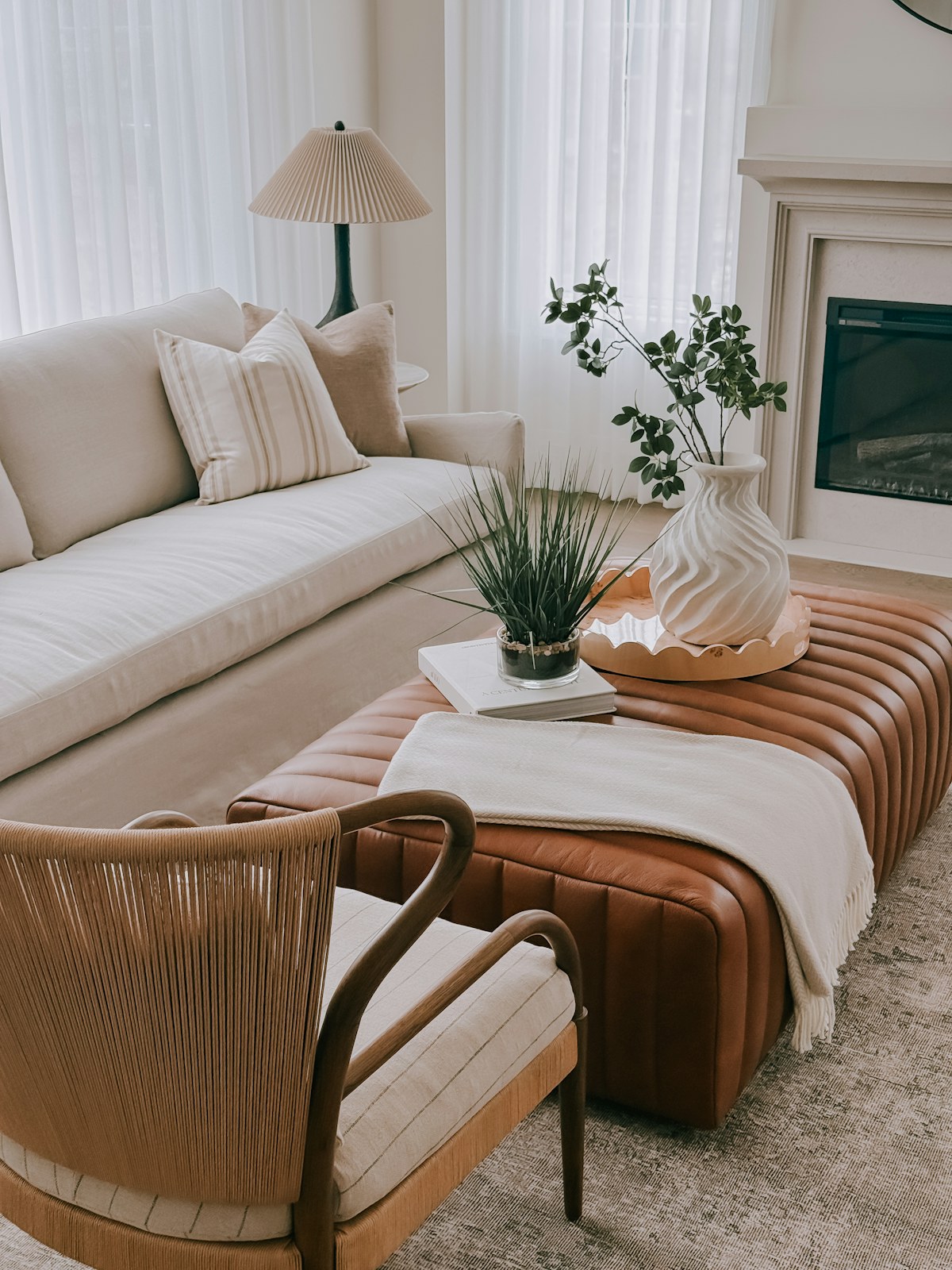
If you need a footrest, begin with the height of your sofa seat and the distance between the sofa and coffee table. A tall ottoman can force an uncomfortable posture. If you need hidden storage for a throw or a few games, look at the interior rather than the exterior dimensions. Wall thickness, framing and a padded lid all reduce usable room. If a table might suit the same space better, compare the footprint and clearance questions in our small living-room guide.
Extra seating is a separate requirement. Do not assume an ottoman can support a person because a product photo shows a tray on its lid. Read the current manufacturer's load guidance and assembly instructions. For a household with children, consider whether the lid has a hinge, lifts off completely or folds. Think about fingers and how often the compartment will be opened.
Compare the job you need the ottoman to perform
| Main use | What to verify | Reason to choose another solution |
|---|---|---|
| Footrest | Height relative to the sofa and enough room to position it | It projects into the route whenever used |
| Occasional seat | Explicit permitted seating use, load guidance and assembled stability | The listing describes only a footrest or leaves seating support unclear |
| Blanket storage | Usable interior and lid access with the blanket inside | The lid is usually covered by objects you need to move first |
| Removable toy or hobby storage | Interior access and suitability for the household | A deep mixed compartment makes sorting harder |
In a hypothetical apartment with a narrow route beside the sofa, place a box matching the candidate's outside footprint where the ottoman would go. Try sitting down, stretching your legs and walking past it. Repeat with the lid removal space marked. This is a layout rehearsal, not a furniture stability test. A foldable design may be convenient to put away, but daily folding can be inconvenient if its interior holds items that must first be removed.
Choose the storage type for this job
If your main need is a safe extra seat, choose only a product whose documentation explicitly supports that use. If it is daily paperwork storage, a reachable shelf may be easier than a covered ottoman. If it is a blanket used once each evening, a storage ottoman near the sofa may suit the routine, provided opening it does not require moving the coffee table.
Choose the option whose access fits the actual routine, or preserve the existing arrangement when neither does. For belongings that need to stay visible, compare a shelf or table in the living-room layout guide. The purchase is successful only if the furniture's extra jobs remain usable in its everyday position.
Work through footprint, lid access and contents
The following measurements are invented for a planning example, not specifications for either linked product. Suppose the available patch beside a sofa is 60 by 50 centimetres, and a candidate has a 45 by 45 centimetre outside footprint. Subtraction leaves 15 centimetres in one direction and 5 in the other. That arithmetic proves only that the closed outline can fit the patch. It does not establish comfortable walking space, seating support or room to open the compartment.
Draw the 45-centimetre outline on paper or with removable tape, then mark the adjacent route separately. Add the actual lid movement from the candidate's documentation. A removable lid needs somewhere to rest; a hinged lid needs space through its swing. If the lid would meet the sofa arm, relocating the ottoman may change its usefulness as a footrest. Make those decisions before counting the hidden volume.
Check one realistic stored category
Work with the blanket, cushion covers or game boxes you intend to store. Group them into the shape they occupy without unnecessary compression. Compare that group with the documented usable interior, rather than the outside footprint. The inside can be narrower or shallower because of the frame and lid. If interior measurements are absent, ask for them before placing an order for a precisely sized object.
Next rehearse the evening routine. Where will a drink or remote go while the compartment is open? Does another person need to pass the ottoman at that moment? Will the blanket return without rearranging the contents? If the answers depend on shifting the coffee table, a reachable existing shelf may suit the category better.
Compare the two links without guessing a winner
Rely on the AmasSmile and ALASDO candidate links below to identify the selected size, interior, opening method and permitted uses. This guide has not established a difference in comfort or durability between them. Missing information is a reason to postpone that candidate, not to assume the models are identical. If sitting is essential, obtain explicit seating guidance before considering either as a seat. Decide on documented fit first and appearance second.
Measure the apartment twice
Tape the ottoman's footprint on the floor. Walk around it with the sofa, door and any pull-out furniture in their normal positions. Leave enough space to approach the compartment and lift or remove the lid. An ottoman that fits neatly beside the sofa may be awkward when a guest chair is occupied or when the sofa bed is open.
For an entryway, measure the door swing and the clear path with shoes on the floor. A storage bench may be better than a low stool when people sit to put on footwear, but it also occupies more wall length. For a living room, decide whether the ottoman will stay in one place or be moved frequently. A lightweight folding model may be convenient to move but may feel different from a solid piece; check its actual construction and load guidance.
What belongs inside?
Storage ottomans are useful for soft items that can be placed inside without a complicated packing routine: a throw, a spare cushion cover or a few toys. They are less useful for objects needed every hour if opening the lid requires clearing a tray first. Papers can bend or become difficult to find in a deep compartment. Heavy books may exceed a lightweight model's intended use.
Choose one or two categories for the compartment. If it holds a mix of electronics, games, linens and mail, you will eventually have to empty it to find the item at the bottom. A small washable bag can group loose items, but leave enough room to lift it out. When the ottoman is used near the entrance, avoid storing wet shoes or damp umbrellas in an enclosed upholstered piece.
Materials and maintenance matter in a small home
An ottoman is likely to be touched every day. Think about how you will clean the surface and whether it will sit in direct sun, near a heater or beside a frequently opened balcony door. A dark surface may show lint, while a pale surface may show marks more quickly. inspect the care instructions for the specific upholstery rather than assuming every fabric can be spot-cleaned in the same way.
Look underneath too. A lightweight piece moved across hard flooring may need suitable floor protection; a fixed piece on a rug may behave differently. The underside and the lid construction can matter more to daily use than a decorative button or stitching detail visible in a listing photo.
Compare two compact approaches
The AmasSmile folding storage ottoman is a compact footrest with a compartment. It is worth considering when an apartment needs a movable piece for a limited amount of soft storage. Verify its current dimensions, interior space, material and weight guidance at the merchant. The ALASDO foldable storage ottoman is another small footrest-style option. Its current listing should be checked for the same details before treating the two as substitutes. For storage across the whole apartment, the room-by-room plan can help you decide where this piece belongs.
Neither should be described as a full-size bench without evidence. If your real need is a place for several people to sit while removing shoes, look for a bench designed for that purpose instead. If your need is a stable table for drinks, check whether a particular ottoman's top supports a tray without wobbling. A soft lid and a rigid lift-top coffee table solve different problems.
When you should buy something else
Skip the ottoman if it will sit in the apartment's main walking route. A shelf, wall hook or existing closet zone may store the same belongings without taking floor area. Skip it as a substitute for a sturdy chair unless the product explicitly supports that use. If you want a work surface at the sofa, a lift-top table may be more suitable. If shoes are the problem, a shoe bench with measured compartments may solve it more directly.
Also consider whether the belongings belong in the living room at all. If the ottoman is being purchased to hide objects you rarely use, a higher closet shelf or under-bed container could be more appropriate. The best small-space furniture removes friction from a routine; it should not simply move the clutter into a box.
Choose an ottoman only after its main job works
Buy an ottoman for a job you can actually use in its normal position. If the footprint or lid routine fails the rehearsal, choose another storage format as an alternative to accepting the obstruction for extra hidden space.
The lid is part of the footprint
A storage ottoman can look compact with its lid closed and still become awkward every evening. Check whether the lid lifts, hinges, or needs to be removed. check there is a safe temporary place for anything sitting on top.
Do not treat a footrest as a seat without the maker explicitly permitting seating. The most useful choice may be a smaller compartment with easier access, not the largest box.
A quick decision checklist
- Measure the exact location, including the available area needed to open doors, lids or drawers.
- Confirm the selected product variant and dimensions on the current manufacturer's listing.
- Consider cleaning, accessibility and whether the item can be returned or moved if the layout changes.
- Choose the simplest option that removes a recurring inconvenience rather than adding storage for its own sake.
Related guides for the next decision
Different rooms often compete for the same limited storage. These guides address adjacent choices without assuming that every home needs another product.
- Small Apartment Storage Ideas, Room by Room — Start with the place where belongings enter or get used, and assign each category a reachable home there.
- Shoe Storage for Small Spaces: Cabinet, Bench or Door Organizer? — Choose a shoe cabinet for suitable pairs you want contained, a bench when approved seating is genuinely needed
- Small Apartment Living Room Ideas That Add Storage Without Crowding the Room — preserve the route through the living room clear, then assign storage to the activities that actually happen besid
- Shoe Storage for a Closet: Shelves, Boxes and Door Pockets — Keep daily shoes visible and reachable, and reserve labeled boxes for suitable occasional footwear.
- How to Organize a Small Closet Before Buying More Organizers — Sort the closet before ordering an organizer: return active hanging clothes, assign folded categories to usable
- Small Bathroom Storage Ideas for Counters, Walls and Under the Sink — Clear a small bathroom by giving the counter, sink cabinet, shower and wall separate jobs while preserving acc
Product candidates for How to Choose a Storage Ottoman for a Small Apartment
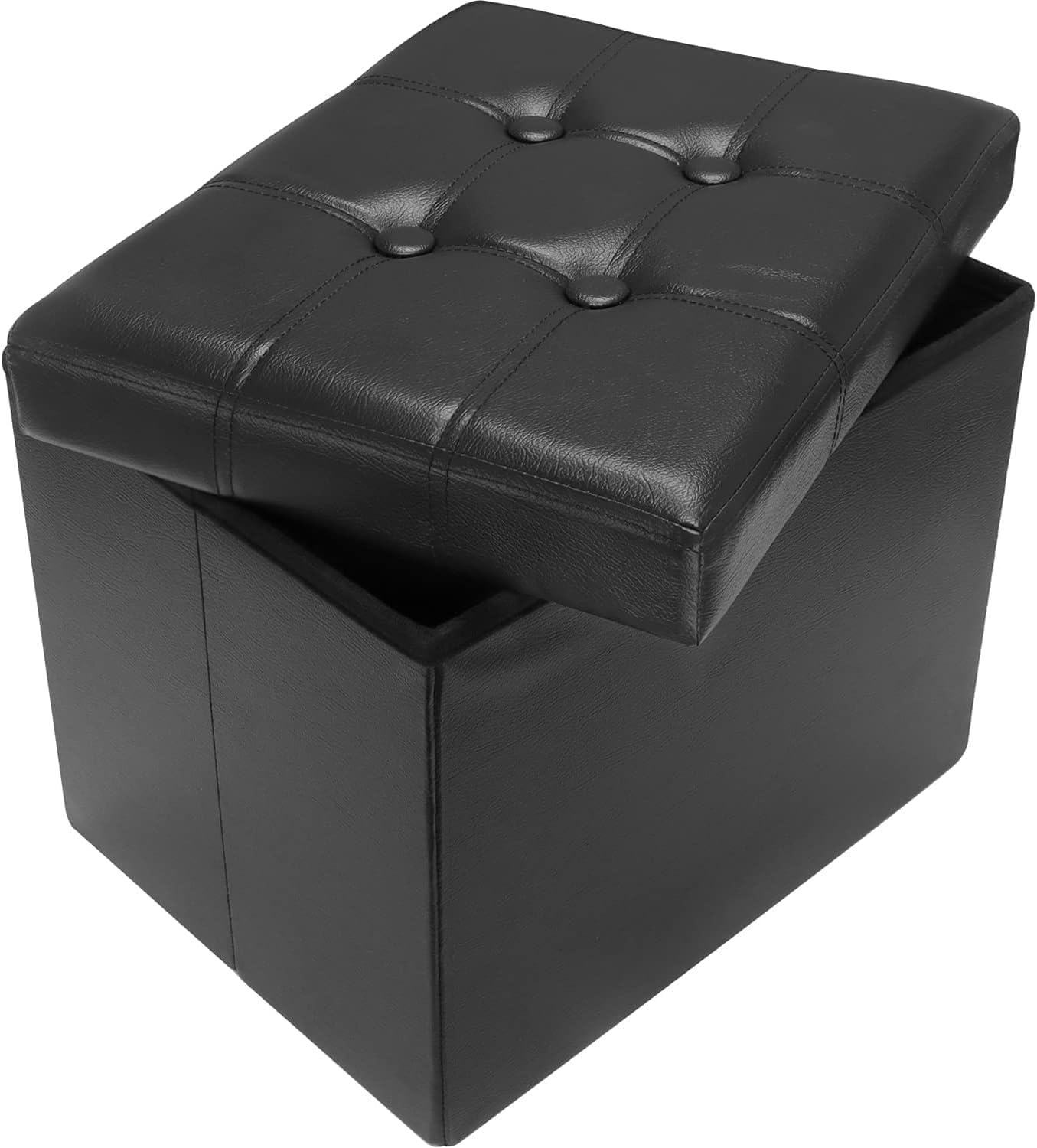
AmasSmile Ottoman with Storage
Chosen for How to Choose a Storage Ottoman for a Small Apartment: it doubles as seating and as hidden storage. Check the floor footprint and the walking route the unit would narrow.
VIEW AT AMAZON.COM
ALASDO foldable storage ottoman
Matched to How to Choose a Storage Ottoman for a Small Apartment: it folds away when the same surface is needed for something else. Confirm it clears the door and the stair turn on the way into the room.
VIEW AT AMAZON.COM
ThreeHio Rolling Kitchen Microwave Cart, 3 Tier Microwave Table Stand with Storage, Kitchen Utility Cart on Lockable Wheels, Small Coffee Station Shel
Shortlisted for How to Choose a Storage Ottoman for a Small Apartment: it moves out of the way when the room has to be cleaned or rearranged. Verify the load rating before it carries the full contents of the space.
VIEW AT AMAZON.COMKeep exploring
 Apartment Storage
A Home Office in a Small Apartment: Store Work Without Taking Over the Room
A practical guide to small apartment home office with measurements, access checks and purchase conditions.
SPACEKINDLY Apartment Storage
A Pantry for a Small Apartment: Choose a Cabinet or Existing Shelf
A practical guide to small apartment pantry with measurements, access checks and purchase conditions.
SPACEKINDLY Apartment Storage
Book Storage in a Small Apartment: Match Shelves to Reading Habits
A practical guide to small apartment book storage with measurements, access checks and purchase conditions.
SPACEKINDLY