
Small Kitchen Storage Ideas That Keep the Counter Usable
Restore a working preparation area by moving spare food to suitable pantry storage, occasional utensils to cabinets or drawers, and washing tools to a cleanable sink position.
This page contains affiliate links. As an Amazon Associate I earn from qualifying purchases.
Define the counter's jobs
Most kitchens need a preparation area, a washing area and somewhere to set down hot or finished food. Their exact positions depend on the room, but each needs enough clear surface to work safely. Measure the counter sections between sink, stove and appliances. Note outlets, windows and cabinet doors. A narrow strip beside a sink may hold soap, yet be too small for a cutting board. Protect at least one uninterrupted prep space before considering a new shelf or cart.
Leave out only things you use frequently and cannot conveniently store near their task. The kettle used every morning may earn counter space; the once-a-month blender may not. An appliance's power cord and ventilation needs matter too, so follow its manufacturer's clearance and use instructions. Do not tuck a hot appliance under a low cabinet simply to make the surface look neat. Wipe the counter and observe which objects immediately return. Those are the categories that need deliberate placement.
Keep a preparation space clear through a whole meal
In a hypothetical narrow kitchen, unpacking ingredients, chopping and washing dishes all happen on the same stretch of counter. Identify which step is blocked first. Moving jars into attractive containers will not restore a work surface if those containers stay in the same place.
| Counter pile | Better decision | Accessory only if needed |
|---|---|---|
| Food packets and spare ingredients | Give them a suitable pantry category | A removable pantry bin that fits the existing shelf |
| Sponges and brushes | Choose a suitable washing and drying position | A holder whose drainage and cleaning access suit that position |
| Utensils used occasionally | Move them to accessible cabinet or drawer storage | Dividers only where the storage layout needs separation |
| Objects with no kitchen use | Return them to their actual room | No kitchen accessory required |
A sink holder is not a substitute for cleaning
Place a candidate holder where it does not obstruct the tap, controls or washing space. Check how water leaves it and how its base can be removed and cleaned. A photographed sponge in a holder does not establish hygienic drying conditions. Avoid storing wet tools where their drainage reaches electrical equipment or food-preparation items.
Use door storage only for the right category
A compatible pantry rack may relocate suitable packets or small jars, but verify the loaded depth against the nearest shelf and the door's movement. It should not obstruct cooking or require holding a door open to reach daily tools. If the food already fits on a shelf after sorting, a rack adds unnecessary hardware.
A small kitchen feels larger when its working surfaces can actually be used. The right storage is whatever helps you wash, prepare, cook and put things away with fewer moves.
Name the interruption before selecting an accessory
Write down the first interruption during preparation, washing and putting away. “Move the cereal boxes to chop vegetables” points to food stock. “Shift wet brushes to reach the tap” points to the washing layout. “Leave clean pans on the counter because the cabinet is blocked” points to cabinet access. These are different storage jobs even when the visible pile is in the same place.
Solve one interruption, then repeat the task with the ordinary dishes and groceries present. The counter should stay available without moving a newly added rack. A sink holder, pantry bin or cupboard change earns its place only when it removes the corresponding interruption.
Make the first drawer work harder
The drawer nearest preparation should hold the small tools used there, within its capacity. Empty it, group tools and check whether a divider would make them visible. Measure the inside rather than the cabinet front. A tray can fit in the box while its compartments are too short for your actual tools. Our drawer organizer measuring guide is the place to start if utensils are currently spread across the counter.
Maintain the drawer easy to close. Overfilling it to clear the counter is only a temporary improvement. If large tools do not fit, move occasional ones to another cabinet. A small upright utensil holder may be appropriate for a few used most often cooking tools, provided it does not obstruct the prep space or sit too close to heat. Choose one location for each category instead of dividing the same group between several visible containers.
Use cabinets by activity
Keep everyday plates and glasses near the dishwasher or sink when possible; cooking tools near the stove; food prep tools near the main counter. Heavy items belong on shelves you can reach and lift from safely. Adjust a shelf height if tall containers are forcing you to lay them on their side. A riser or pull-out may help when a deep cabinet hides items, but measure the opening and access path. The cabinet zoning guide gives a fuller sequence.
Do not try to turn every cabinet into a two-tier system. A fixed shelf can reduce the footprint above tall appliances, and a pull-out requires clearance past door hinges. First remove unused items, then move what remains according to use. If a cabinet is deep and difficult to reach, reserve its rear for things you use occasionally rather than making daily tools depend on an expensive organizer.
Keep the sink area intentional
Dish soap, a sponge and a dish rack may need space near the sink. Check whether the rack can drain into the sink or onto a suitable tray without keeping the counter damp. A very large rack can consume the only prep area, especially if dishes remain there for days. Consider how quickly dishes can be put away and whether a smaller drying area would work with your routine. maintain the faucet and sink edge easy to clean.
Under the sink, plumbing and a disposal reduce the usable space. A narrow caddy may hold backup sponges and cleaners, but keep valves accessible and watch for leaks. The under-sink kitchen guide explains how to measure around pipes before purchasing a pull-out. Do not move food into a cabinet with cleaning products simply to free a pantry shelf.
Make pantry storage visible
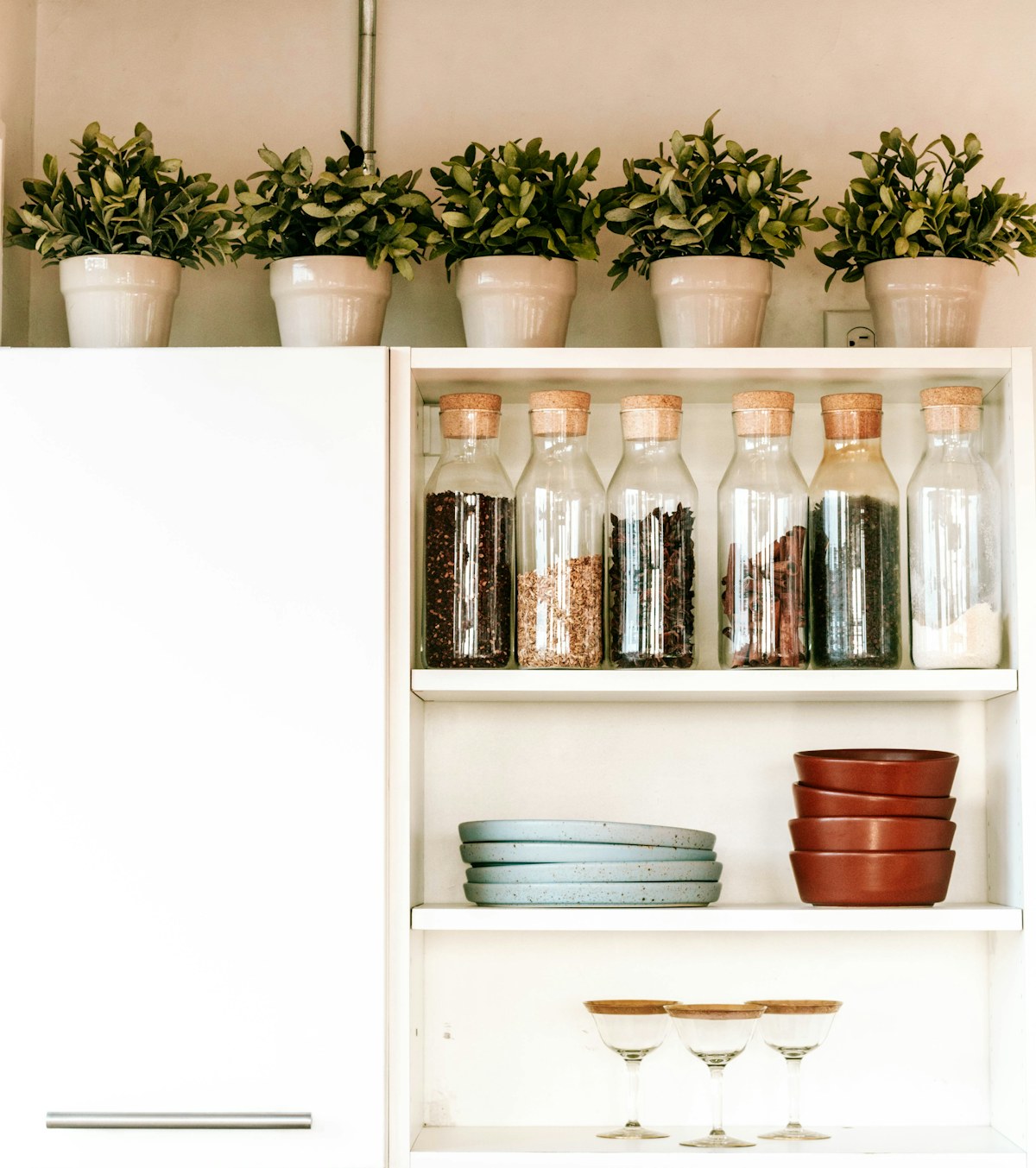
When food overflows onto the counter, check whether the pantry holds duplicates hidden behind other packages. Sort by meal or type, bring soon-to-be-used food forward and place heavy items lower. A transparent bin can group loose packets; it cannot make a deep shelf accessible if it is too heavy to lift out. Door space can hold lightweight items if the door closes and the mounting method is suitable. Our small pantry guide gives dimensions and access checks.
Do not decant everything for a uniform appearance without preserving dates, allergen information and preparation directions. A small kitchen benefits more from being able to see what is available than from a matching set of containers. If the pantry is still too full, reduce backstock or move suitable occasional items to another dry zone. Avoid a permanent row of bulk food on the preparation counter.
Use walls and door backs carefully
A shallow rail or hook can free a drawer, but only when the wall, load and placement are suitable. Keep tools away from flames, heat and the path of a cabinet door. A magnetic rack for knives, for example, needs correct installation and safe placement; it is not an automatic improvement for a household with children. Door-mounted organizers can work for light items, but measure the gap between door and shelves before committing to an order.
Open wall storage remains visible and collects kitchen grease and dust. Use it for objects you really reach, not as decoration that requires frequent cleaning. If the wall above the counter is already occupied by cabinets, use cabinet organization before squeezing a shelf under them. The simplest gain may be moving an infrequently used appliance off the counter and giving its former footprint back to preparation.
Run a seven-day test
Mark one section as clear prep space and keep it clear for a week. Notice what repeatedly lands there. If mail appears, create a landing place outside the kitchen. If groceries remain, make pantry restocking simpler. If clean dishes accumulate, review the drying and unloading routine. These observations tell you which storage purchase, if any, will have an effect. A cart that becomes a second crowded counter has not solved the original problem.
Check the walking path before adding a rolling cart. Measure its resting space and the surrounding area needed to open drawers, fridge and oven while it is there. Wheels and handles increase the outer footprint. In a very narrow kitchen, keeping the floor clear may be more valuable than the cart's extra shelves. If the cart moves every day, make sure its contents are stable and the wheels are appropriate for the floor.
Keep the decision simple
- Preserve a clear preparation area first.
- Store tools near the task where they are used.
- Measure openings and movement before adding shelves, carts or dividers.
- Keep heavy items at a safe lifting height and follow appliance clearances.
- Reassess the counter after a normal week rather than a staged cleanup.
Finish the arrangement for Small Kitchen Storage Ideas That Keep the Counter Usable
Maintain the preparation area available through an ordinary meal. When an object interrupts the work again, change its home before spending on another piece another countertop accessory.
Product candidates for Small Kitchen Storage Ideas That Keep the Counter Usable

Tall Storage Cabinet with Door Shelves & Drawer, Kitchen Pantry Cabinet
Chosen for Small Kitchen Storage Ideas That Keep the Counter Usable: it separates categories by level so a single reach does not disturb the rest. Check the counter or cabinet opening and the clearances the listing states.
VIEW AT AMAZON.COM
Rubbermaid Brilliance BPA-Free Food Storage Containers with Lids Airtight Kitchen and Pantry Organization Set Includes 3 Containers and Scoops Clear 16 cups
Matched to Small Kitchen Storage Ideas That Keep the Counter Usable: it keeps one category visible in a single grab. Confirm the internal height against the tallest item it has to hold.
VIEW AT AMAZON.COM
288 Pantry Labels for Food Containers, Preprinted Minimalist Waterproof Stickers for Organizing Storage Bins, Jars and Kitchen
Shortlisted for Small Kitchen Storage Ideas That Keep the Counter Usable: it labels what is inside, which is what keeps a system working after the first week. Verify the depth against the walkway that has to stay clear.
VIEW AT AMAZON.COMKeep exploring
 Small Kitchen
Appliances on a Small Counter: Decide What Earns a Permanent Position
Restore a working preparation area by moving spare food to suitable pantry storage, occasional utensils to cabinets or drawers, and washing tools to a cleanable sink position.
SPACEKINDLY Small Kitchen
Narrow Pantry Cabinets: Compare Width with Usable Shelf Space
A practical guide to skinny pantry cabinet, built around real measurements, access and the routine that has to work every day.
SPACEKINDLY Small Kitchen
Paper Towel Holders: Compare Counter, Wall and Under-Cabinet Positions
Restore a working preparation area by moving spare food to suitable pantry storage, occasional utensils to cabinets or drawers, and washing tools to a cleanable sink position.
SPACEKINDLY